
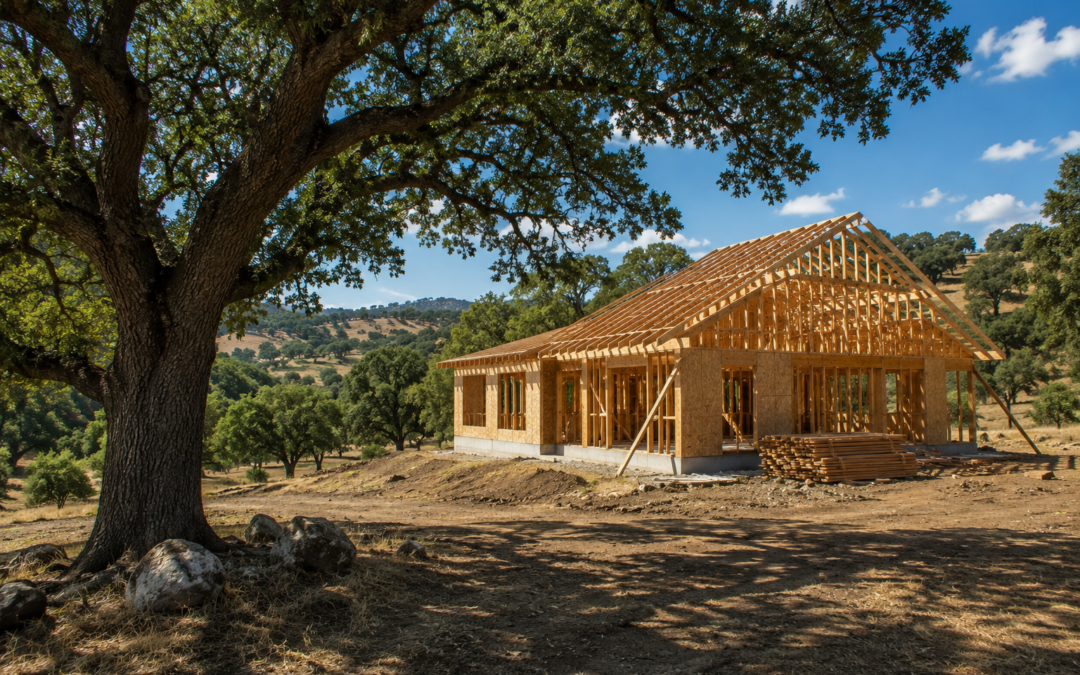
Finding and purchasing land for building a home can feel overwhelming, stressful, and full of unknowns. Many families worry about hidden costs, unsuitable terrain, financing hurdles, zoning issues, or overpaying. Yet clear patterns and proven steps emerge from guiding countless families through this journey. With the right approach—including innovative financing options like Spurr Mortgage’s no down payment land loan program—you can navigate the process with far greater confidence and turn raw land into the foundation of your dream home.
This comprehensive guide covers everything from initial financing decisions to closing with certainty. It draws on practical experience and integrates Spurr Mortgage’s specialized land financing solutions, which make land ownership accessible without the traditional large down payment barrier that stops many buyers.
Five Basic Steps to Finding and Buying Land
Successful land purchases follow a logical sequence. Tackle them in order to minimize risks and surprises:
- Financing: Determine your payment sources and get pre-approved first.
- Finding: Locate properties that match your criteria for location, size, topography, privacy, and price.
- Evaluating: Assess whether the land is truly buildable and calculate improvement costs.
- Negotiating: Arrive at a fair market value and favorable terms.
- Closing: Transfer ownership smoothly with legal and financial certainty.
Skipping steps, especially financing or evaluation, often leads to heartbreak or unexpected expenses. Let’s break each down in detail.
Step 1: Financing — Secure Your Funding Before You Shop
Traditional land loans are challenging. Banks often require 15-35% down payments (higher for raw/unimproved land), strong credit, and sometimes view vacant land as riskier than improved lots. This can tie up tens of thousands in cash you might prefer to save for construction, site prep, or other life needs.
Spurr Mortgage’s No Down Payment Land Loan Program changes that equation, especially in Oklahoma, Kansas, Missouri, and Arkansas. As a locally owned lender with over 33 years in business (and 15+ years specializing in 100% land financing), Spurr offers flexible programs that help buyers own land sooner without waiting years to save a large down payment.
Key features of their 100% No Down Payment Land Loan include:
- 0% down — Finance the full purchase price.
- Minimum credit score around 680 (a 95% LTV / 5% down option lowers this to 650 in some cases).
- 15-year terms.
- Loan amounts typically from $50,000 minimum, with varying maximums (e.g., up to around $500k–$800k depending on the program and acreage).
- Limits such as up to 100 acres on certain options; no acreage limit on others.
- Designed specifically for residential lots or raw land intended for building.
They also offer a complementary One-Time Close Construction Loan option. This can finance land purchase and home construction together, or roll in an existing land loan later. If you already own land free and clear, its equity can help reduce or eliminate down payment requirements on the build.
Why this matters for confidence: Getting pre-approved early tells you your realistic budget, strengthens your negotiating position (sellers love financed buyers who can close), and prevents emotional purchases you can’t afford. Contact Spurr via their site (spurrmortgage.com or nodownpaymentlandloan.com), apply online, or visit their Edmond, OK office. They emphasize quick responses and even offer second opinions on other lenders’ estimates.
Beyond Spurr, explore:
- Seller financing (owner carries the note).
- USDA rural development programs (in eligible areas).
- Local credit unions or specialty land lenders.
- Conventional options if you have savings for partial down payment.
Factor in not just the land price but future costs: site preparation, utilities, septic, driveway, and permits. A good lender can help model total project affordability.
Step 2: Finding Land — Cast a Wide Net
No single method works best. Use multiple channels simultaneously for the strongest results.
Real Estate Agents: Work with agents experienced in land sales or familiar with your target communities. They access the Multiple Listing Service (MLS) for broader inventory and can provide market insights, comps, and negotiation support. Many specialize in rural or undeveloped properties.
Online Marketplaces:
- LandWatch.com
- LandAndFarm.com
- LandsOfAmerica.com
- Craigslist (local sections)
- Zillow or Realtor.com (filter for vacant land)
- County property tax/assessor websites for off-market opportunities
Boots on the Ground: Drive target areas. Look for “For Sale by Owner” signs, assess road quality and access, note commute times, tree density, neighboring properties, and overall feel. Talk to locals at general stores, feed stores, or county offices—they often know about upcoming sales or motivated sellers.
Additional Tactics:
- Network in local Facebook groups, homesteading forums, or real estate investor meetups.
- Contact county extension offices or planning departments for lists of subdividing properties.
- Look for auctions (tax sales, estate sales) but approach with extra caution and due diligence.
- Define clear criteria upfront: minimum/maximum acres, school district, distance to work/amenities, topography preferences (flat vs. rolling, wooded vs. open), road frontage, and price per acre.
Patience pays off. The “perfect” parcel rarely appears immediately, but consistent searching reveals strong options.
Step 3: Evaluating Land — Is It Good to Build On?
Discovering a promising parcel is exciting, but thorough evaluation prevents costly mistakes. Focus on these key areas:
Utilities and Access:
- Electricity: Is it nearby? Extension costs can reach thousands per pole/transformer.
- Water: Municipal hookup, well (test for yield and quality), or cistern? Drilling a well can cost $5,000–$15,000+.
- Sewer/Septic: Perc test required for septic approval—critical and sometimes failed.
- Natural gas, phone, high-speed internet.
- Road access: Private vs. public, maintenance responsibilities, easements.
Environmental and Regulatory Factors:
- Flood Zones: Check FEMA maps. Building in a flood plain or floodway brings restrictions, higher insurance, or impossibility.
- Zoning and Restrictions: Confirm allowable uses (residential, agricultural). Check setbacks, minimum square footage, HOA rules, building codes, or agricultural exemptions.
- Soil and Topography: Geotechnical testing for stability, especially on slopes or expansive clays.
- Environmental issues: Wetlands, protected species, mineral rights, or contamination.
Survey and Boundaries:
- Require a current pin survey (professional boundary stakes with monuments). Old deeds or “fence lines” often prove inaccurate. Discrepancies in acreage can renegotiate price.
- Title search for liens, easements, or disputes.
Site Preparation Costs:
- Clearing trees, grading, fill dirt, driveway installation, and retaining walls.
- Estimate via contractor bids or bulldozer-hour calculations. A seemingly cheap parcel can become expensive after heavy site work or dump truck loads of material.
Practical Tips:
- Visit multiple times in different weather (after rain for drainage/flooding).
- Hire professionals: Surveyor, soil engineer, septic designer, home builder (for feasibility feedback), and possibly an environmental consultant.
- Talk to neighbors and current owners about well history, flooding events, or local quirks.
- Verify property taxes and any upcoming assessments.
A thorough evaluation turns “maybe” into “yes, with eyes wide open.” Budget 1-5% of purchase price (or more) for these due diligence costs—they’re investments in confidence.
Step 4: Negotiating for the Land
Honest, good-faith offers based on fair market value yield the best long-term results. Lowballing sometimes works but often offends sellers and kills deals, especially with motivated but reasonable owners.
Determine Market Value:
- Ask your real estate agent for recent comparable sales (comps) via MLS.
- Review county assessor records and recent sales data.
- Hire a professional appraiser ($300–$600) for formal valuation—well worth it for larger purchases.
Negotiation Levers Beyond Price:
- Seller concessions (closing costs, survey payment).
- Closing timeline flexibility.
- Repairs or improvements (e.g., clearing a portion).
- Contingencies for inspection, perc test, or financing.
- Addressing acreage discrepancies revealed by survey.
Present yourself as a serious, prepared buyer (pre-approval letter helps). Build rapport—many rural sellers value knowing the land goes to someone who will cherish it.
Step 5: Closing — Transfer with Certainty
Once terms are agreed:
- Hire a reputable real estate attorney or title company experienced with land transactions.
- Secure title insurance to protect against hidden claims.
- Finalize survey, appraisals (lender-required), and all inspections.
- Review the HUD-1 or Closing Disclosure for accuracy.
- Prepare for simultaneous needs if building soon (e.g., coordinating with Spurr’s construction options).
Closing on land is often simpler than a home but still requires vigilance on legal descriptions, access rights, and utilities.
Common Pitfalls and Pro Tips for Confidence
- Don’t fall in love too soon — Emotional decisions bypass due diligence.
- Budget holistically — Land + site prep + utilities + construction + contingencies.
- Timeline realistically — Land deals can take 30-90+ days; add time for due diligence.
- Tax and legal implications — Agricultural exemptions, 1031 exchanges (if investing), or homestead rules.
- Sustainability — Consider long-term factors like water availability, climate resilience, and community growth.
- Leverage expertise: Builder, lender (like Spurr), surveyor, and agent form your support team.
Final Thoughts: Owning Land Is Achievable
Buying land doesn’t have to be stressful or unattainable. By starting with solid financing—such as Spurr Mortgage’s no down payment options in their service area—you remove a major barrier and move forward decisively. Combine that with systematic searching, rigorous evaluation, fair negotiation, and professional closing support, and you build genuine confidence.
Thousands of families have successfully made this transition. Define your vision clearly, do the homework, and partner with experienced professionals. Your perfect piece of land—and the home you build on it—is within reach. Start by getting pre-qualified, mapping your search area, and reaching out to resources like spurrmortgage.com for financing tailored to land buyers.
The journey rewards patience and preparation. Happy land hunting!
(Word count: approximately 1,950. This guide is for informational purposes. Consult licensed professionals, lenders, and attorneys for your specific situation, as requirements vary by location and change over time.)