
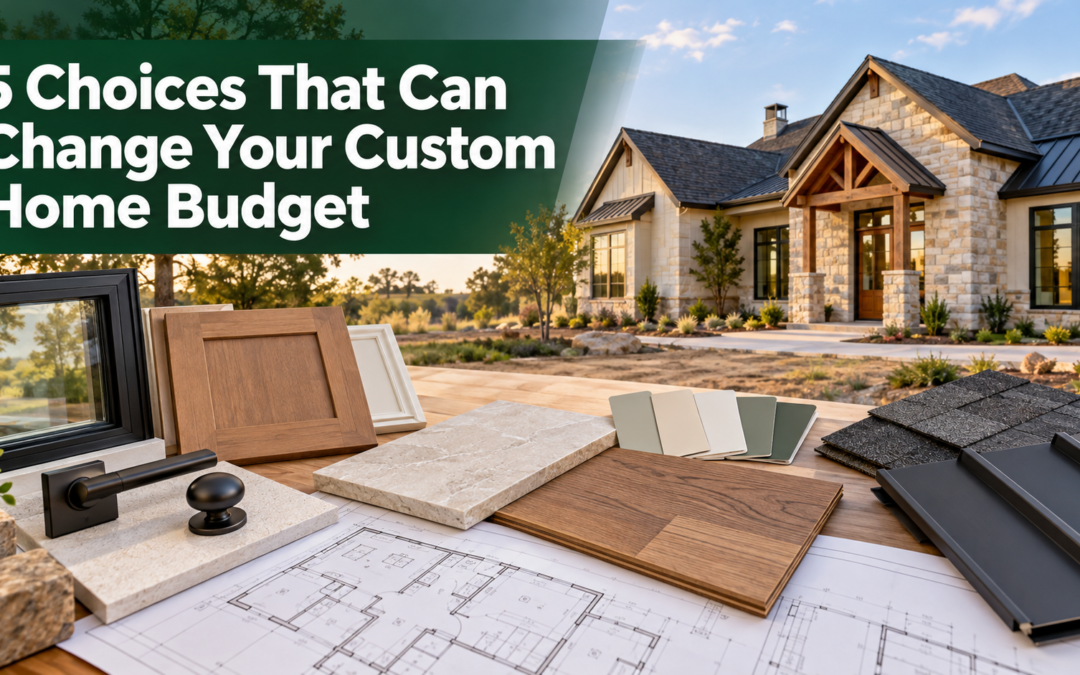
Five Choices That Can Change
Your Custom Home
Construction Budget
A builder’s estimate is more than the total at the bottom of the page. The materials and finishes included in each line item determine what that total will buy. Before you settle on a construction budget, compare the builder’s allowances with the choices you actually want for your home.
1. Windows and doors
- Compare the type of windows and doors included in the estimate with the style you have in mind.
- Frame materials, sizes, configurations, and specialty doors can change the cost.
- Ask your builder to identify the specific products or allowance used in the budget. If you plan to choose a different package, request an updated price before finalizing your plans.
2. Cabinetry and trim
- Cabinet costs depend on the design, materials, finish, and how the cabinets are built.
- Custom millwork, detailed molding, paneling, and specialty finishes can add both material and labor costs.
- Decide which rooms matter most to you. You may want to prioritize cabinetry in the kitchen while choosing simpler trim elsewhere.
3. Flooring
- Ceramic tile, porcelain, natural stone, engineered wood, and solid hardwood have different material and installation costs.
- Large tiles, specialty patterns, site-finished floors, and detailed inlays can require more preparation and labor.
- Compare the installed price, including subfloor work and finishing, rather than the material price alone.
4. Wall finishes
- Paint, plaster, wallpaper, and wood or stone paneling can produce very different budgets.
- Labor is a major part of the price for finishes that require extensive preparation or skilled handwork.
- Ask where a specialty finish will have the greatest impact, then price that choice by room.
5. Roofing
- Asphalt shingles, standing-seam metal, tile, and slate differ in material and installation cost.
- A roofing choice may also affect related items, such as flashing, trim, and gutters.
- Have your builder price the complete roof system, not just the roofing material.
How to use these five categories when reviewing an estimate
- Start with what is included. Request a written description of the materials, finishes, and allowances behind the builder’s numbers.
- Mark your priorities. Identify the features you care about most before making selections.
- Price changes early. Ask for revised numbers when your preferred choices differ from the estimate.
- Review the full project budget. Include
land, site preparation, utilities, permits, and a reasonable reserve for changes alongside the cost of the home.
- Discuss financing before finalizing plans. The construction budget, builder, and proposed home all play a part in the loan review. A one-time-close construction loan may help qualified borrowers finance construction and permanent mortgage financing through one closing.
The takeaway: A useful construction budget reflects the home you intend to build. Working through these five choices with your builder can help you spot differences between an initial estimate and your finished plans before they become expensive surprises.
Ask your builder for prices specific to your plans and property.
Jennifer Buffington
Construction Specialist
Spurr Mortgage | Edmond, OK
Watch this You Tube Video https://www.youtube.com/watch?v=FC6pZBnF9UQ